cutover with Cutover
Standardize planning and execution of cutover events with Cutover's automated runbooks
Technology operations processes including IT disaster and cyber recovery, application release or patching and cloud migrations can be complex, resource intensive and lengthy. These large-scale processes have nuances and challenges, but one common denominator is that each requires a portion of the plan and execution dedicated to the cutover event. A cutover event is generally defined as the following:
The rapid transition from one phase of business enterprise or project to another
In this eGuide, we’ll overview the challenges in planning and execution of a cutover and how to standardize and automate with Cutover’s Collaborative Automation platform and automated, dynamic runbooks.
Examples of cutover events
Cutover events typically include: data conversion, old system shutdown or decommissioning, new system testing and activation, and user training. The goal - a smooth transition to the next phase or project.
IT disaster and cyber recovery
The cutover event during an IT disaster or cyber recovery event is to execute the recovery plan and orchestrate the dependencies across teams and systems to restore the important business services as quickly as possible. The recovery plans can include transferring workloads from the primary production location to the secondary, off-site location or restore to bare metal platforms. Leading up to the failover/cutover event, there are numerous tasks and communications required to be orchestrated to keep teams and technology aligned and the cutover on track.
Cloud migration
During a cloud migration, the cutover phase includes moving network traffic from existing endpoints to your newly deployed resources. For most applications, you’ll move multiple integration points requiring numerous steps riddled with risk and complexity.
There is a strong correlation between the length of required downtime and the criticality of the applications being migrated. Typically, the risk increases for mission-critical or business-critical applications because they require a shorter downtime window. The higher the risk, the more extensive the cutover needs to be to manage the complexity and mitigate the risks. Cloud service providers (CSPs), like AWS, provide prescriptive guidance for the cutover phase helping enterprises understand the various steps.
Release and upgrade events
For application release or upgrade management, the cutover stage is a multi-step process including activities to import data, test the upgraded production environment, get the database upgrade in production/upgrade the database and install other components.
Regardless of the cutover event, an aligned and well-communicated plan helps ensure success. Ensure upstream and downstream impacts are identified, communicated, and aligned across all levels from team members to senior leadership.
Cutover planning and execution challenges
The various technology operational processes that include cutover planning and execution share common challenges. While each cutover project plan, individual milestone and outcome differ, most deal with the following challenges.
- Timeframe, complexity and risk: All of these components vary depending on the business requirements, technology stack in use, application architecture, etc.
- Planning and testing: Similar to an IT disaster or cyber recovery plan, the cutover plan itself includes hundreds of tasks with varying complexity and dependencies, managed by multiple technology teams.
- Ad-hoc communication: Managing communication across teams in multiple channels (email, phone bridges, unified communications platforms, etc.) can cause confusion and delays in task handoffs.
- Lack of governance: Just outlining your governance strategy including tooling, roles and communication isn't sufficient, you need to be able to actively execute upon it and track, in real time, the execution and escalation paths.
- Transparency and visibility: Without clear visibility into real-time data during the cutover event, people can easily miss steps or make mistakes leading to extra downtime.
Five ways to automate your cutover plans with Cutover's runbooks
Cutover’s Collaborative Automation SaaS platform provides a single source to standardize and execute your IT DR, cyber recovery, cloud migration and application releases. It connects your teams, technology, and applications, combining both automated and manual tasks. Let’s look at four of the ways Cutover runbooks help you standardize, automate and enhance the planning and execution of cutover events.
1) Standardize technology operational procedures with dynamic, automated runbooks
A well-documented cutover plan should include step-by-step detailed instructions, including dependencies between tasks and teams, of how to address technology operations along with the associated milestones and success metrics.
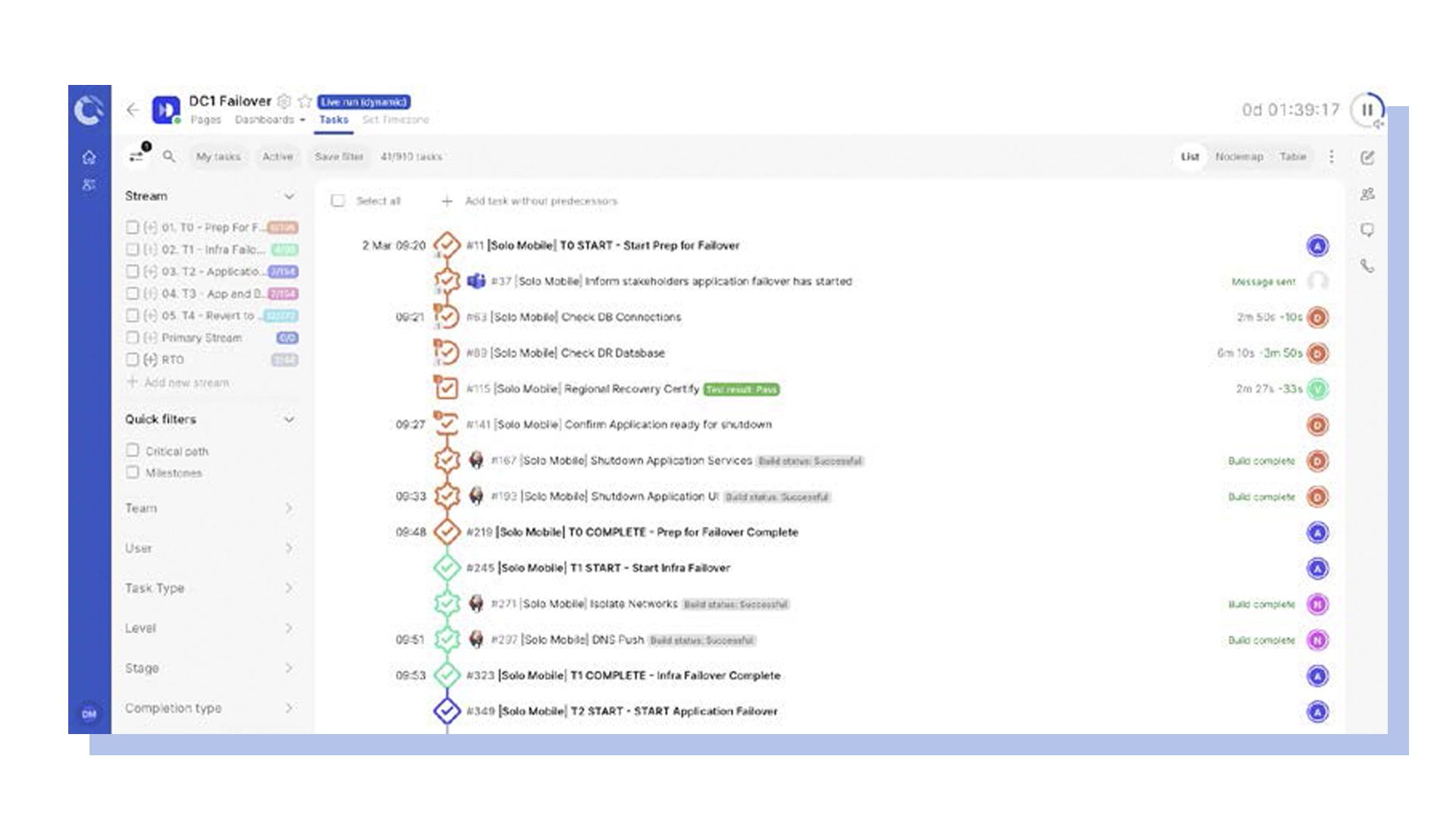
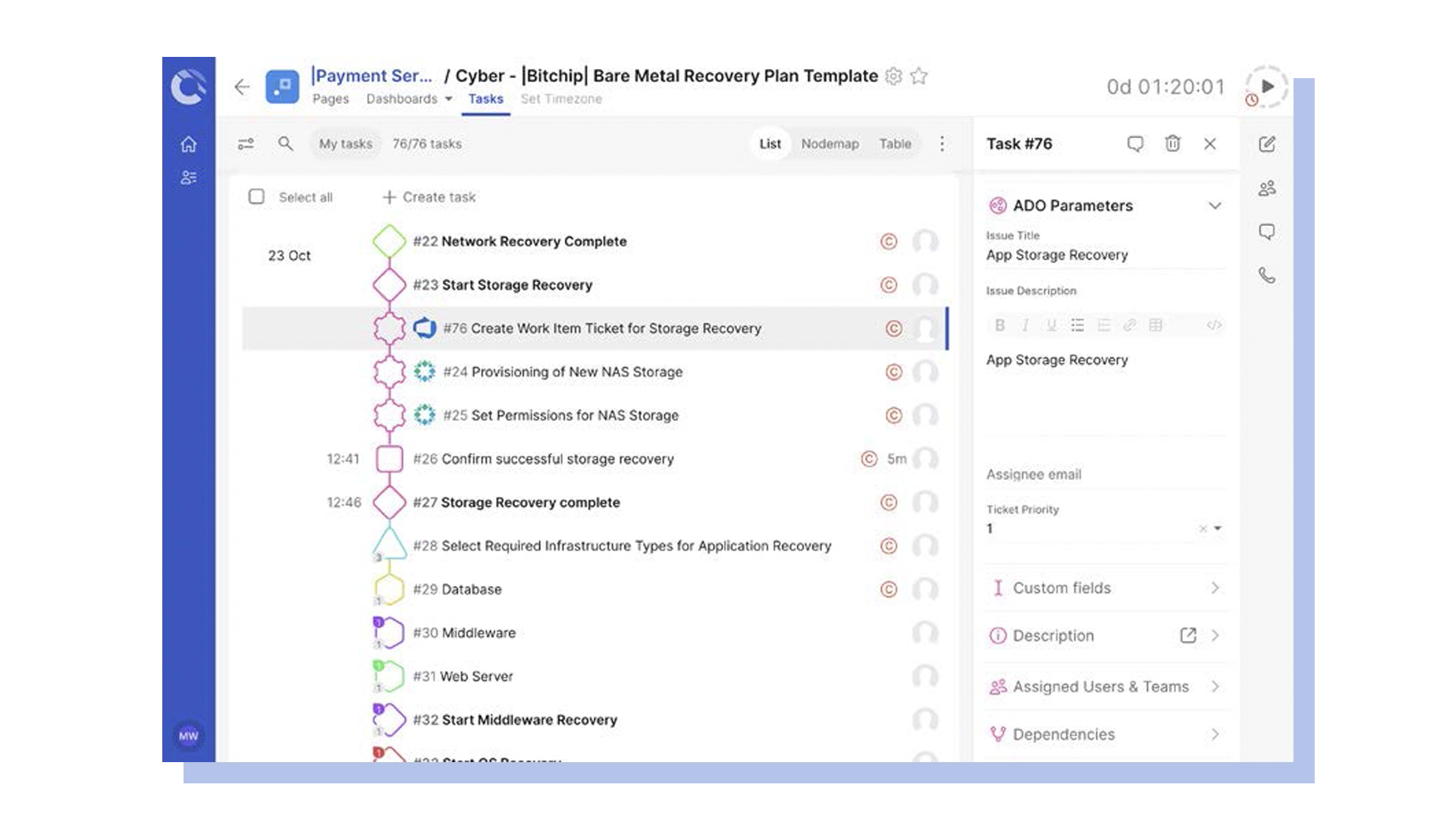
Using Cutover’s dynamic, automated runbooks you can create executable cutover plans complete with task-level details, assigned resources, and dependencies. Runbooks outline your comprehensive and detailed cutover planning and execution strategy to ensure consistency and standardization. Simplify testing with approved, templated runbooks so you can pinpoint any potential weak points.
Cutover runbooks enable you to efficiently and accurately execute an event, whether during a cloud migration, IT disaster or cyber recovery, or application upgrade or patching.
Cutover's dynamic runbooks outline a set of tasks and dependencies to complete an operation, like a cutover event. They are dynamic in nature and can be changed during execution.
2) Link runbooks to more easily manage large-scale cutover events
Managing the orchestration of many connected events is complex and prone to errors.
Cutover’s linked runbooks help reduce complexity and improve control of large-scale technology events - including cutover events during release, recovery or migrations. With linked runbooks you can easily orchestrate tasks and maintain control with parent/child relationships in runbooks. Delegate activities across runbooks and control the start of child runbooks from the parent. Streamline communications across all linked runbooks to ensure all technology and business teams have the right information, at the right time.
3) Gain clear visibility into tasks and dependencies with the node map
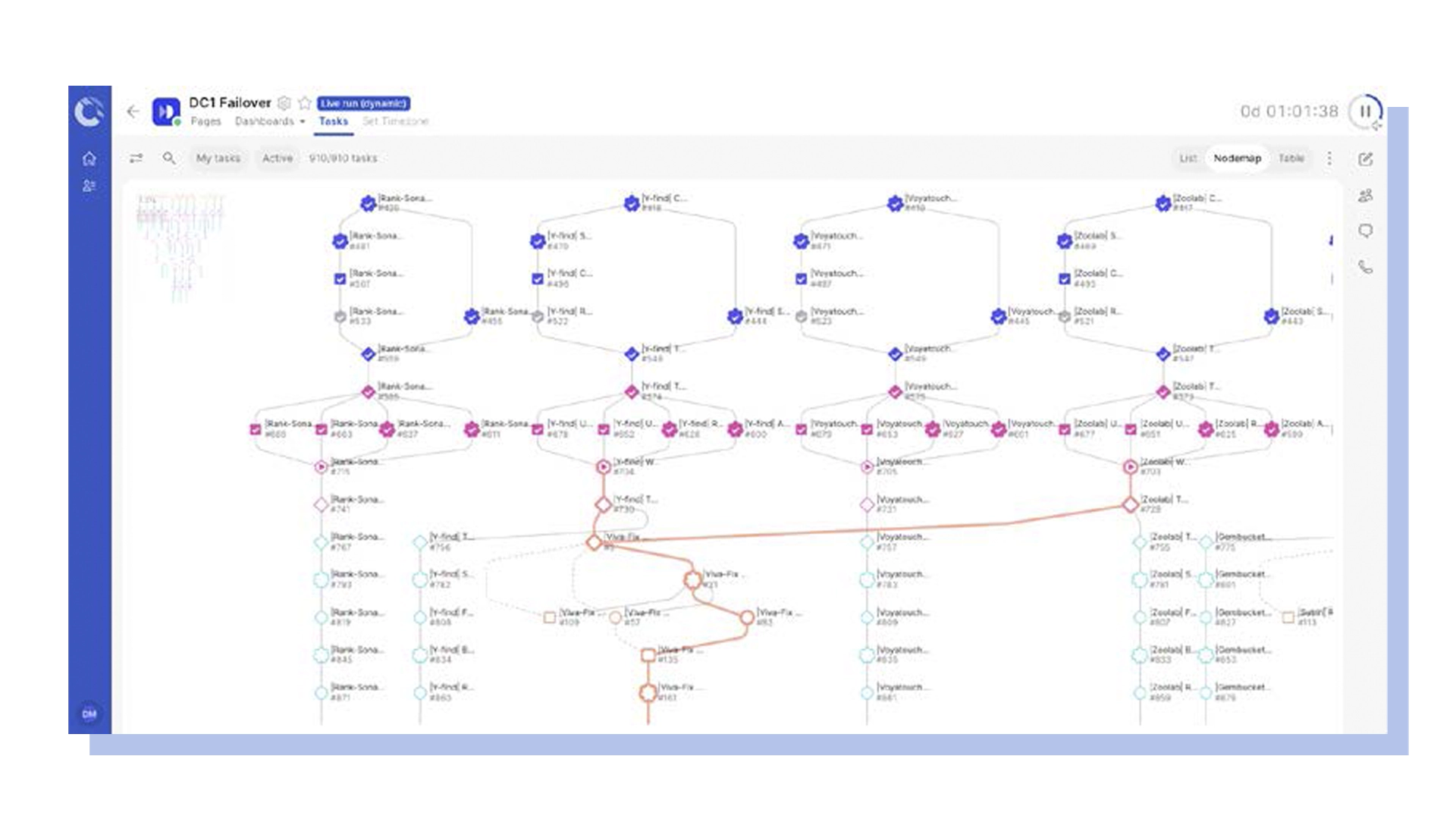
Lack of visibility during a cutover rehearsal or live event can cause confusion, potential delays, and extended downtime. Understanding who is doing what, and when, is critical.
Cutover’s platform enables you to visualize the entire cutover process from start to finish, all in one place. The node map is an interactive pictorial representation of your cutover event runbook. It highlights the dependencies between tasks so you can instantly view the end-to-end flow of your event. Cutover automatically calculates a dynamic critical path based on conditions of time - so you know the maximum time necessary to complete the entire project.
4) Evaluate cutover event metrics with dashboards and post-review analytics
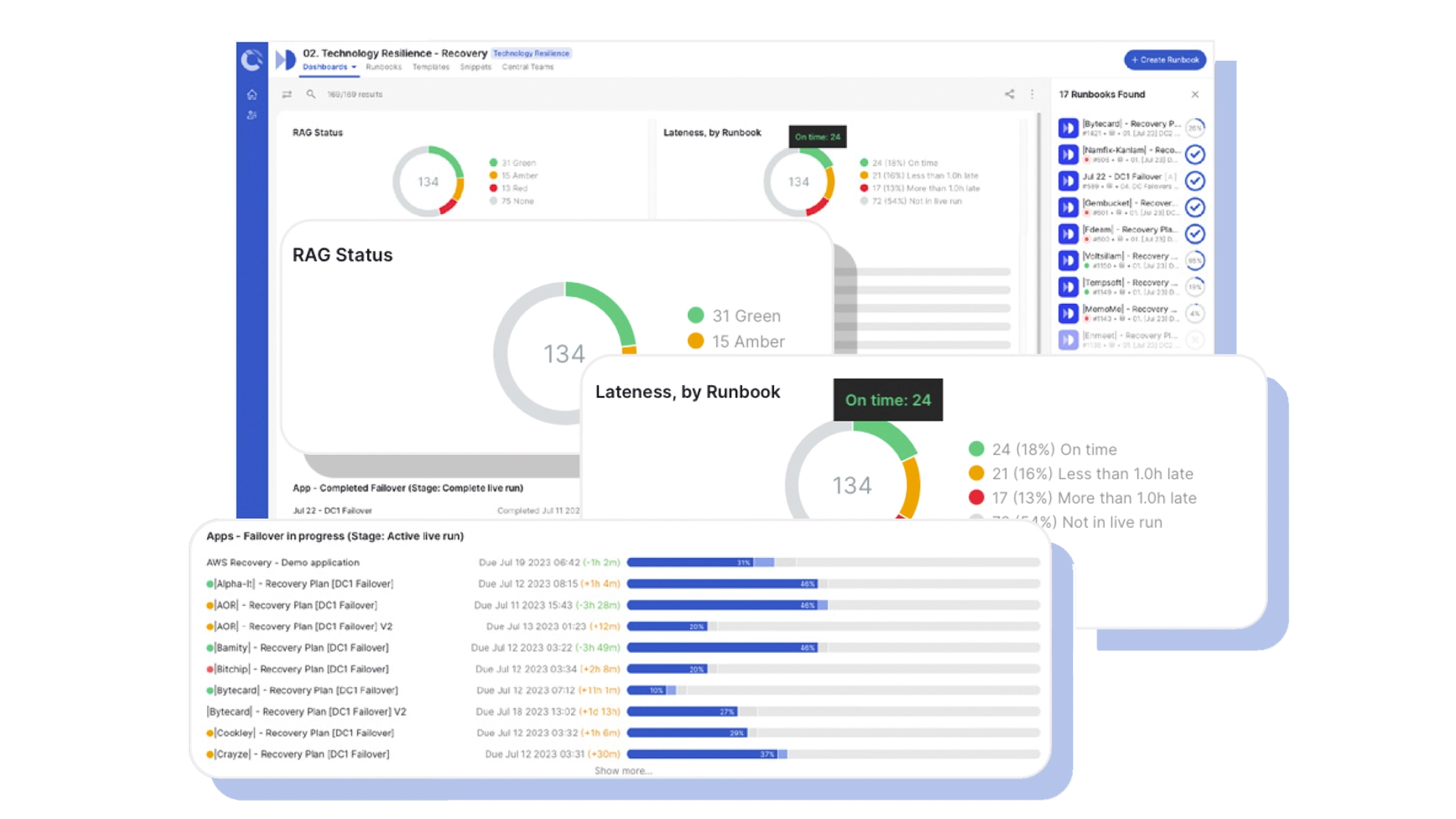
During a cutover, it’s critical to understand and report on progress. You need the ability to validate your processes and identify points of failure so you can fix them before the next upgrade, IT disaster recovery scenario, or application cloud migration. Static reports are manually intensive and quickly become outdated, causing inaccurate reports on progress or confusion on status.
Cutover’s out-of-the-box live dashboards provide real-time data and clear visibility into the tasks that have been completed as well as the status of individual tasks and the cutover event as a whole. These give a clear and complete picture of the status of all tasks including milestones, startable tasks, and in progress tasks. Post-review analytics provide instant access to the information you need to understand how your runbook has performed once complete.
With Cutover's dashboards and analytics, you can:
- Evaluate the effectiveness of the plan
- Understand if the objectives were met with real-time data and post-event review
- Assess event performance results and identify areas for future improvements
5) Coordinate and collaborate seamlessly during cutover events
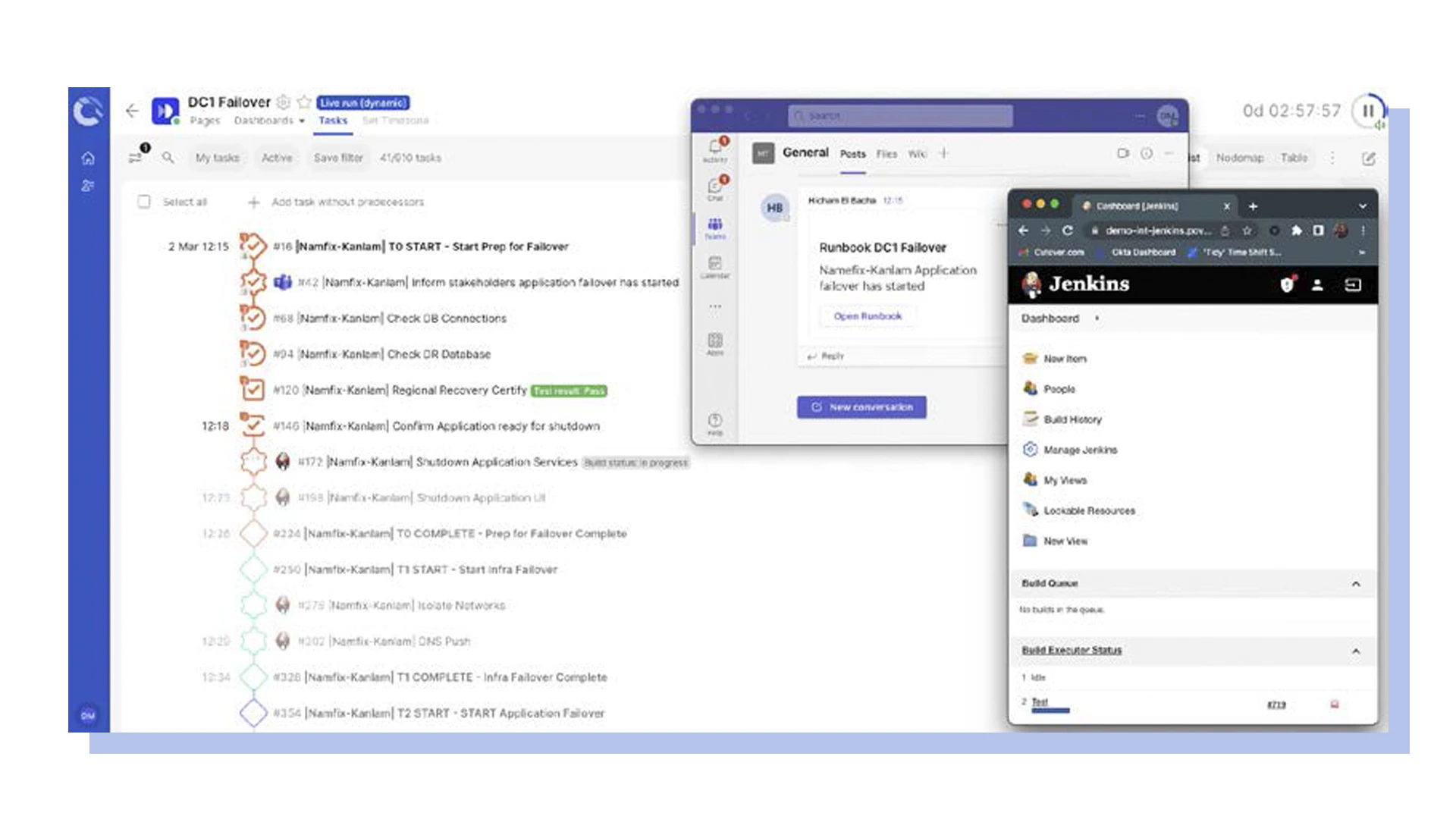
During cutover events, orchestrating hundreds or thousands of tasks requires tight collaboration across multiple and dispersed technology teams. Keeping all teams informed and aligned on progress and troubleshooting issues as they arise reduces errors and can help you ensure it runs smoothly.
Cutover’s built-in communications are sequenced alongside tasks, keeping all communication in one place, at hand, and in context with the activity. Connect siloed teams with embedded communications to mobilize quickly. Automate communications across channels including text messages, Slack, Microsoft Teams, email, and video conferencing with Cutover’s integration capabilities.
Get started with Cutover runbooks
Whether you are actively executing a cutover event or planning a future one, consider the dependencies, risks and communication requirements. Take your cutover planning and execution to the next level with Cutover’s Collaborative Automation platform and automated runbooks. Standardize cutover plans and automate execution with increased visibility, control and communication.
To learn more, read Your ultimate guide to runbooks